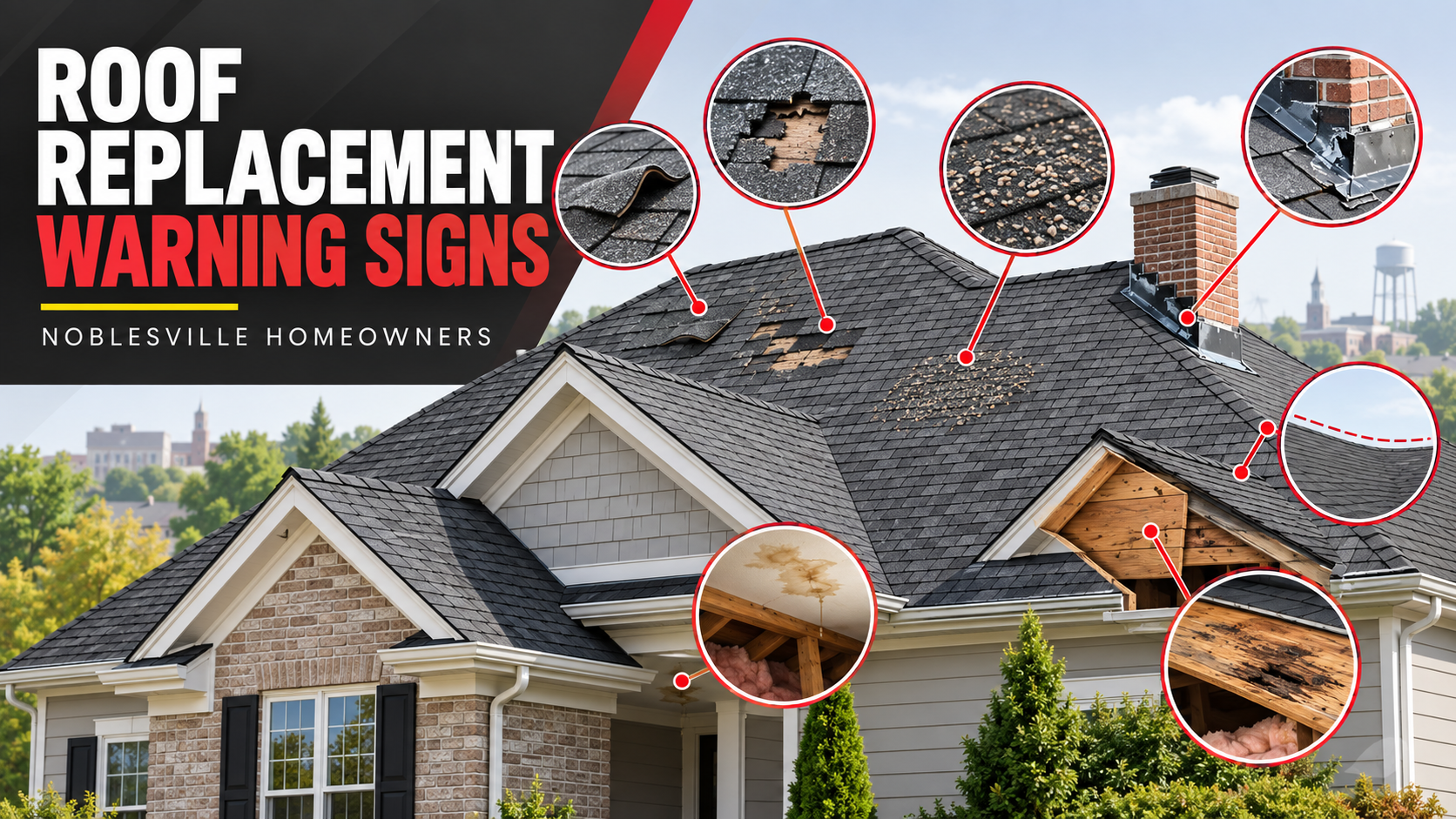
A roof can look fine from the driveway while hiding conditions that may affect a homebuyer’s plans after closing. Missing granules, aging flashing, poor drainage, inadequate ventilation, and earlier repairs are not always obvious during a casual showing. If you are buying a home in Muncie, a focused roof evaluation can help you understand the system’s current condition and its likely remaining service life.
A homebuyer roof inspection is not about finding reasons to reject a house. It is about replacing uncertainty with useful information so you can make a better-informed decision.
Why the Roof Deserves Special Attention Before Buying
The roof includes shingles, underlayment, flashing, decking, ventilation, gutters, and drainage details. A weakness in one area can affect insulation, ceilings, walls, and interior finishes even when most of the roof appears intact.
A general home inspection may flag visible concerns. A roofing professional can examine suspected issues, explain whether they are isolated or widespread, and discuss next steps. Scheduling a roof inspection in Muncie, Indiana is especially helpful when the roof’s age is unknown, repairs are visible, or records are incomplete.
What Buyers Should Learn About the Shingles
Shingles provide the roof’s primary weather-shedding surface, but appearance alone does not tell the whole story. The inspector should consider whether the shingles are lying flat, remaining securely attached, and wearing consistently across the different roof slopes.
Look Beyond Missing Shingles
Beyond missing shingles, curling edges, cracks, lifted tabs, exposed fasteners, uneven coloring, and widespread granule loss may indicate aging or damage. Earlier repairs may also introduce visibly different materials.
One damaged area does not automatically require replacement. Buyers should ask whether the condition is localized and repairable or part of a broader pattern.
Do not climb onto the roof to investigate. Roofing surfaces may be steep, slick, loose, or less stable than they appear. Observe only from safe ground-level locations and leave close evaluation to a qualified professional.
Flashing and Roof Penetrations Need Careful Review
Flashing directs water away from chimneys, walls, valleys, vents, and other transitions. Loose, corroded, separated, or poorly integrated flashing may admit moisture even when nearby shingles remain intact.
Ask the inspector to explain visible repairs, sealant buildup, gaps, or deterioration. Heavy surface sealant may suggest that an issue received a temporary treatment rather than a correction at its source.
Plumbing vents, exhaust vents, skylights, and chimneys introduce joints that must remain watertight. An assessment should consider exterior details and related evidence inside the attic or living space.
Drainage Problems Can Affect More Than the Gutters
Gutters that sag, pull away, overflow, or drain toward the foundation may indicate debris, poor alignment, or damaged components. Roof valleys and low-slope transitions can also collect debris and slow drainage.
From the ground, buyers can look for stained fascia, eroded landscaping near downspouts, standing water, damaged gutters, or vegetation growing from gutter sections. These observations do not identify the cause, but they provide useful questions for the inspector.
Overhanging branches may scrape shingles or drop debris, while heavy shade can keep roofing damp longer. Buyers should understand how nearby trees affect drainage without accessing the roof themselves.
Ventilation Influences Roof Performance
Attic ventilation helps manage heat and moisture beneath the roof deck. When airflow is unbalanced or blocked, heat and humidity may build up in the attic. Over time, moisture can affect insulation, decking, fasteners, and other materials.
A homebuyer roof inspection should consider intake and exhaust vents, blocked openings, condensation, and accessible attic areas. The presence of vents alone does not confirm effective airflow.
If an attic has safe, secured access and appropriate walking surfaces, a professional may look for damp insulation, staining, rusted fasteners, musty odors, or daylight around roof openings. Buyers should not step between walking surfaces, touch wet electrical components, or enter an unstable area.
Previous Repairs Tell Part of the Roof’s Story
Repairs are not automatically negative. What matters is why the work was needed, what was repaired, and whether the issue returned.
Ask for invoices, installation dates, inspection reports, photographs, and descriptions of past leaks. Multiple repairs in one area, recurring stains, or work across several slopes may warrant closer evaluation by a Muncie roofing contractor.
Be careful with assumptions. A newer-looking section does not prove that damaged decking or underlayment was replaced beneath it. Likewise, an interior stain may be old and dry rather than evidence of an active leak. Inspection findings and available documentation should be considered together.
How to Recognize Possible Leak Evidence
Water can travel along rafters, decking, pipes, or framing, so a ceiling stain may not sit below the entry point. Look for discoloration, peeling paint, damp insulation, musty odors, or repaired ceiling sections.
Ask whether moisture readings or other observations indicate an active condition and whether the suspected source was identified. A single isolated flashing leak may require a different response than widespread deterioration or moisture in several areas.
Finding roof problems before buying does not determine what should happen in the transaction. It gives you clearer information to discuss with your real estate and inspection professionals and helps you anticipate maintenance or repairs after ownership.
Estimating the Roof’s Remaining Service Life
No inspector can guarantee when replacement will be needed. Shingle type, installation, ventilation, maintenance, tree cover, storms, moisture, and temperature changes all affect performance. Records provide context, but physical condition matters more than age alone.
Ask the inspector to place the roof in a practical condition category: performing as expected, showing repairable concerns, approaching the need for broader work, or requiring prompt attention. The explanation should connect that opinion to specific observations rather than relying only on a general lifespan estimate.
Useful questions include:
- What is the roof’s approximate age, and how was it determined?
- Are concerns isolated or visible across multiple slopes?
- Is there evidence of active or recurring moisture?
- How are the flashing, gutters, valleys, and penetrations performing?
- Do previous repairs appear to be holding?
- What maintenance or repairs should be prioritized?
Get Clear Roofing Information Before Closing
When buying a home in Muncie, knowing the roof’s condition can help you plan with greater confidence. A focused inspection can reveal what the shingles, flashing, drainage, ventilation, repair history, and interior evidence say about the system as a whole.
Ace Construction & Remodeling is a family-owned contractor headquartered in Anderson and serving East Central Indiana since 1996. Learn more about Ace’s roofing services or visit the local Muncie roofing contractor page.
If you need help identifying roof problems before buying or want a professional evaluation of a Muncie property, request a quote from Ace Construction & Remodeling. The team can inspect the roof, explain the findings, and help you understand the practical next steps.