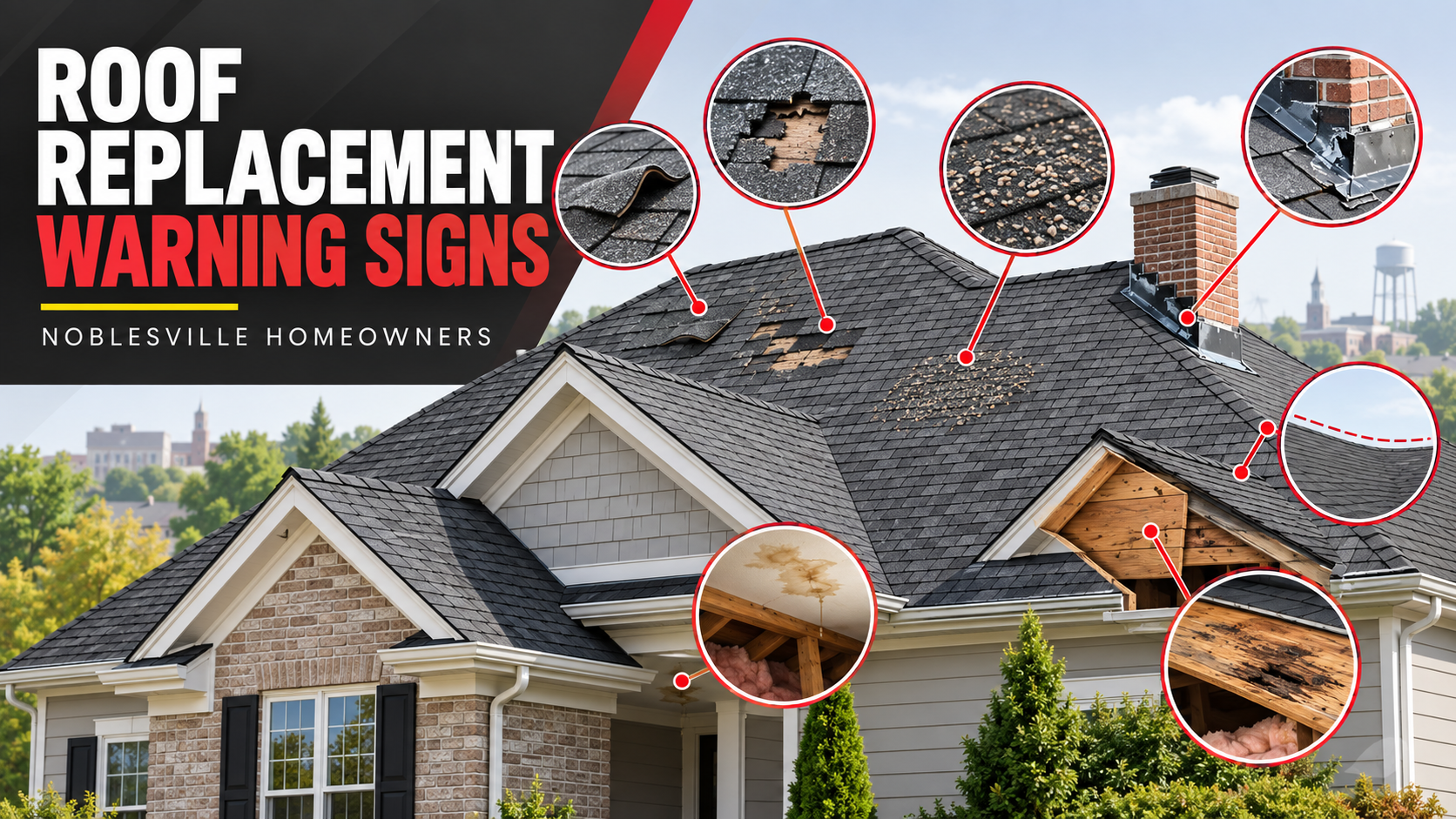
After a strong storm moves through Fishers, it is natural to look at your roof from the yard and assume everything is fine if no shingles are missing. Unfortunately, some of the most important problems are difficult—or impossible—to see from the ground. Lifted seals, damaged flashing, small punctures, and loose vents can allow moisture into the roofing system even when the roofline still looks normal.
Understanding the signs of roof storm damage Fishers Indiana homeowners may encounter can help you respond before a small opening leads to a larger repair. The key is to observe safely, document what you can, and arrange a professional assessment when the storm was severe or something appears out of place.
Why Storm Damage Is Often Hidden
A roof is a layered system that depends on underlayment, flashing, fasteners, seals, vents, and decking as well as visible shingles. Wind and flying debris can affect these components without creating an obvious hole.
Damage can also be subtle at first. A shingle may settle back into place after being lifted by wind, hiding a broken seal underneath. A vent may shift only slightly. A puncture caused by a small branch may be concealed by debris or located on a roof slope that cannot be seen from the street. This hidden roof damage may not reveal itself until wind-driven rain reaches the vulnerable area.
Lifted Shingle Seals and Wind-Damaged Shingles
Asphalt shingles are designed to seal together along adhesive strips. When wind gets beneath a shingle edge, it can lift the shingle and weaken or break that bond. The shingle may then lie flat again, making the problem difficult to identify from below.
Once the seal is compromised, the shingle may be more vulnerable during the next storm, and water can be pushed underneath its edge. The shingle may also crease, crack, tear, or loosen around its fasteners.
What You Might Notice From the Ground
Look for uneven shingle lines, raised edges, fluttering tabs, or sections that differ from the surrounding roof. Shingles or granules may also be on the ground. Their absence does not rule out wind-damaged shingles, which a professional can examine safely.
Flashing Damage Around Roof Openings
Flashing helps direct water away from vulnerable transitions, including chimneys, plumbing vents, skylights, roof-to-wall intersections, and valleys. Strong wind, hail, and debris can bend, loosen, separate, or puncture flashing. Sealant around these areas may also crack or pull away.
Because flashing is often partly covered by shingles or installed high on the roof, damage may not be visible from the yard. Even a small separation can admit water, which may travel along decking, framing, or insulation before an indoor stain appears.
Small Punctures From Hail or Debris
Not every puncture looks like a large hole. A branch, sharp piece of debris, or impact can damage a shingle and the material beneath it while leaving only a small mark on the surface. Hail can also bruise or fracture shingles without knocking them off the roof.
Punctures are especially easy to miss on a steep, rear-facing, or shaded section. This is one reason a roof inspection after storm conditions can be worthwhile even when the home looks normal from the sidewalk.
Loosened Roof Vents and Accessories
Roof vents, ridge vents, exhaust caps, and other roof-mounted components are exposed to the same wind and impact as the shingles. A storm can loosen fasteners, distort a vent cover, pull up an edge, or damage the flashing around the opening.
From the ground, watch for a vent that appears tilted, raised, missing a cap, or different from neighboring vents. Also look for metal or plastic pieces in the yard. Do not reposition a loose component yourself; roof accessories must be secured and sealed correctly.
Water Intrusion May Appear Later
Water intrusion does not always produce an immediate ceiling drip. Moisture may first dampen the roof decking, insulation, or framing. Over time, homeowners may notice a musty odor, discoloration, peeling paint, damp insulation, or stains on ceilings and walls.
After a storm, check ceilings on the upper floor, around skylights, and near fireplaces or vent penetrations. If the attic is safely accessible, look from a stable surface for daylight, damp materials, or stains. Do not walk on ceiling joists, disturb wet electrical components, or enter an area that appears damaged.
If active water is near a light fixture, outlet, appliance, or electrical panel, keep away and contact an appropriate professional.
How to Inspect Safely From the Ground
Homeowners can perform a useful first check without climbing a ladder or stepping onto the roof.
Walk the Property at a Safe Distance
Once conditions are safe, walk around the home while staying clear of downed lines, unstable trees, standing water, and hanging debris. View the roof from several angles; binoculars or a camera’s zoom can help.
Look for:
- Missing, shifted, curled, or visibly torn shingles
- Uneven roof edges or lifted-looking shingle sections
- Bent or displaced flashing that is visible from below
- Crooked, loose, or missing vent caps
- Branches or debris resting on the roof
- Shingle fragments or roofing materials in the yard
- Dented, loose, or overflowing gutters and downspouts
- New stains on ceilings or walls inside the home
Photograph concerns from safe locations. Avoid standing beneath damaged limbs, loose gutters, or materials that could fall.
Do Not Climb Up for a Better Look
A storm-damaged roof may be slick or weakened in ways you cannot see. Loose shingles and wet surfaces increase fall risk. Leave close inspection, temporary protection, and repairs to trained professionals.
When to Request Fishers Roof Repair
Contact a roofer promptly if you see missing materials, shifted vents, damaged flashing, debris impact, interior moisture, or another change after severe weather. Consider an inspection when nearby properties show obvious damage even if your roof appears intact.
A professional evaluation can determine whether the roof needs a focused repair, further monitoring, or a broader solution. Ace provides roofing services throughout East Central Indiana and has a dedicated page for its Fishers roofing services. These resources can help homeowners learn more about inspection, repair, and replacement options without assuming every storm automatically requires a new roof.
Schedule a Professional Roof Inspection in Fishers
The safest response to possible roof storm damage Fishers Indiana homeowners cannot see is not to climb up and search for it. Start with careful observations from the ground, check the interior for moisture, and have questionable areas evaluated by a roofing professional.
Ace Construction & Remodeling is a family-owned contractor headquartered in Anderson and serving East Central Indiana since 1996. If you are concerned about hidden damage, loosened flashing, punctures, vents, or wind-damaged shingles, request a quote for professional Fishers roof repair. A timely roof inspection after storm conditions can give you a clearer understanding of your roof and the next practical step.