A roof rarely fails without giving some advance warning. The challenge is recognizing when isolated damage may be repairable and when several problems point toward broader failure. For Noblesville homeowners, noticing changes early can help limit interior damage and make it easier to plan the right next step.
Below are important old roof warning signs to watch for from the ground and inside your home. Never climb onto the roof to investigate.
1. Missing and Curling Shingles
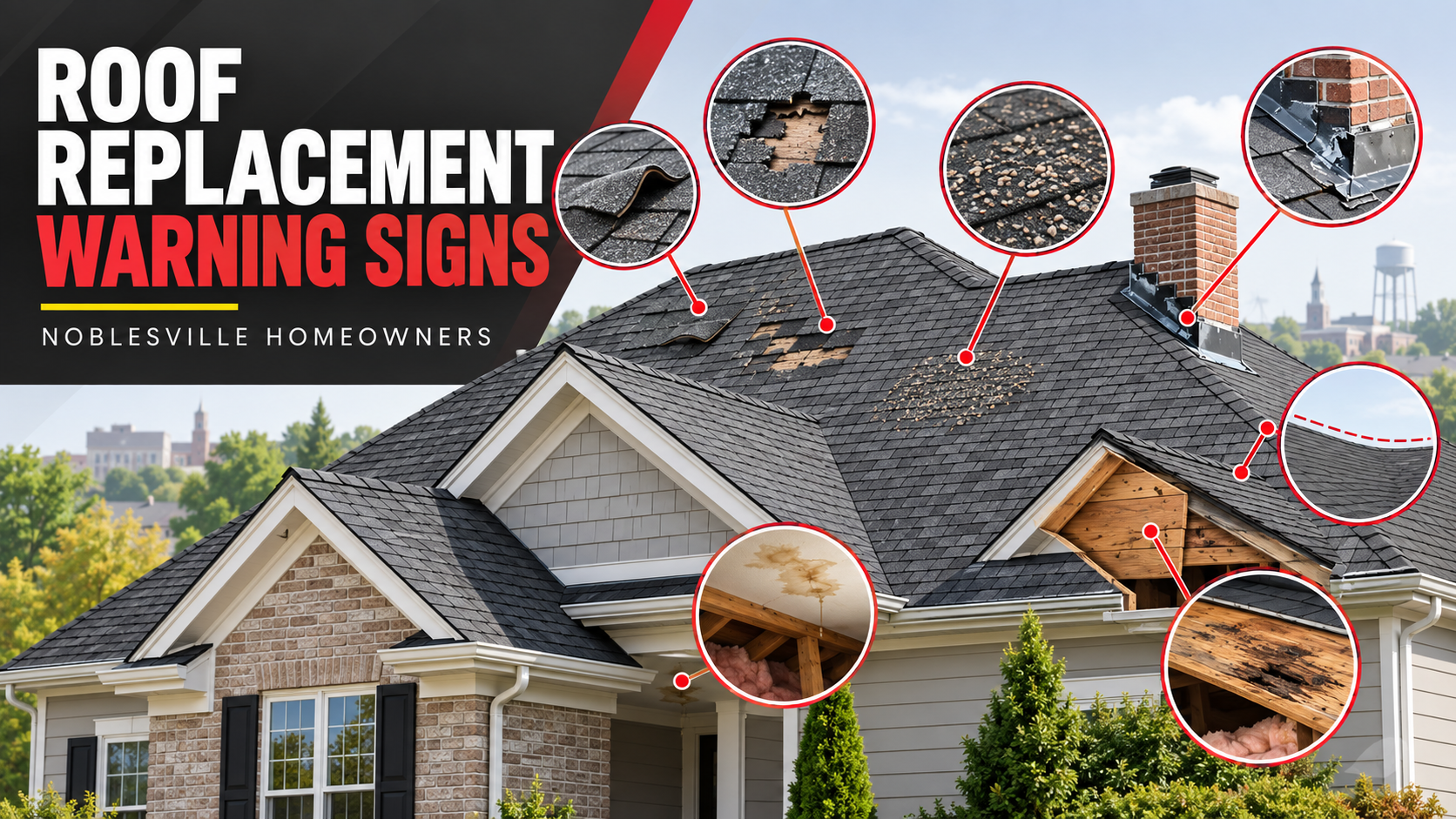
Shingles form the roof’s primary weather-shedding surface. When they begin to curl at the edges, lift, crack, or disappear, the layers beneath them become more vulnerable to wind-driven rain and moisture.
A few damaged shingles in one area may be repairable. However, missing and curling shingles across multiple roof slopes can indicate widespread aging rather than one isolated problem. Other visible concerns include:
- Shingle tabs that no longer lie flat
- Cracks running through several shingles
- Bare or irregular patches after windy weather
- Shingles collecting on the ground around the home
Look from a safe location at ground level or use binoculars. Do not use a ladder or walk on the roof. A professional can determine whether damage is limited or residential roof replacement deserves consideration.
2. Excessive Granule Loss
Asphalt shingles are covered with protective granules. These granules help shield the asphalt layer from sunlight and everyday weather exposure. Some loose granules are normal, particularly with recently installed shingles, but large amounts of granule loss on an older roof can signal deterioration.
You may notice dark, sand-like material near downspout outlets or shingles that look patchy, shiny, or bald. When many shingles have lost their protective surface, replacing only one or two may not address the overall condition.
Consider granule loss alongside other old roof warning signs, such as curling, cracking, leaks, and repeated repairs. A professional can determine whether wear is localized or widespread.
3. Leaks That Keep Returning
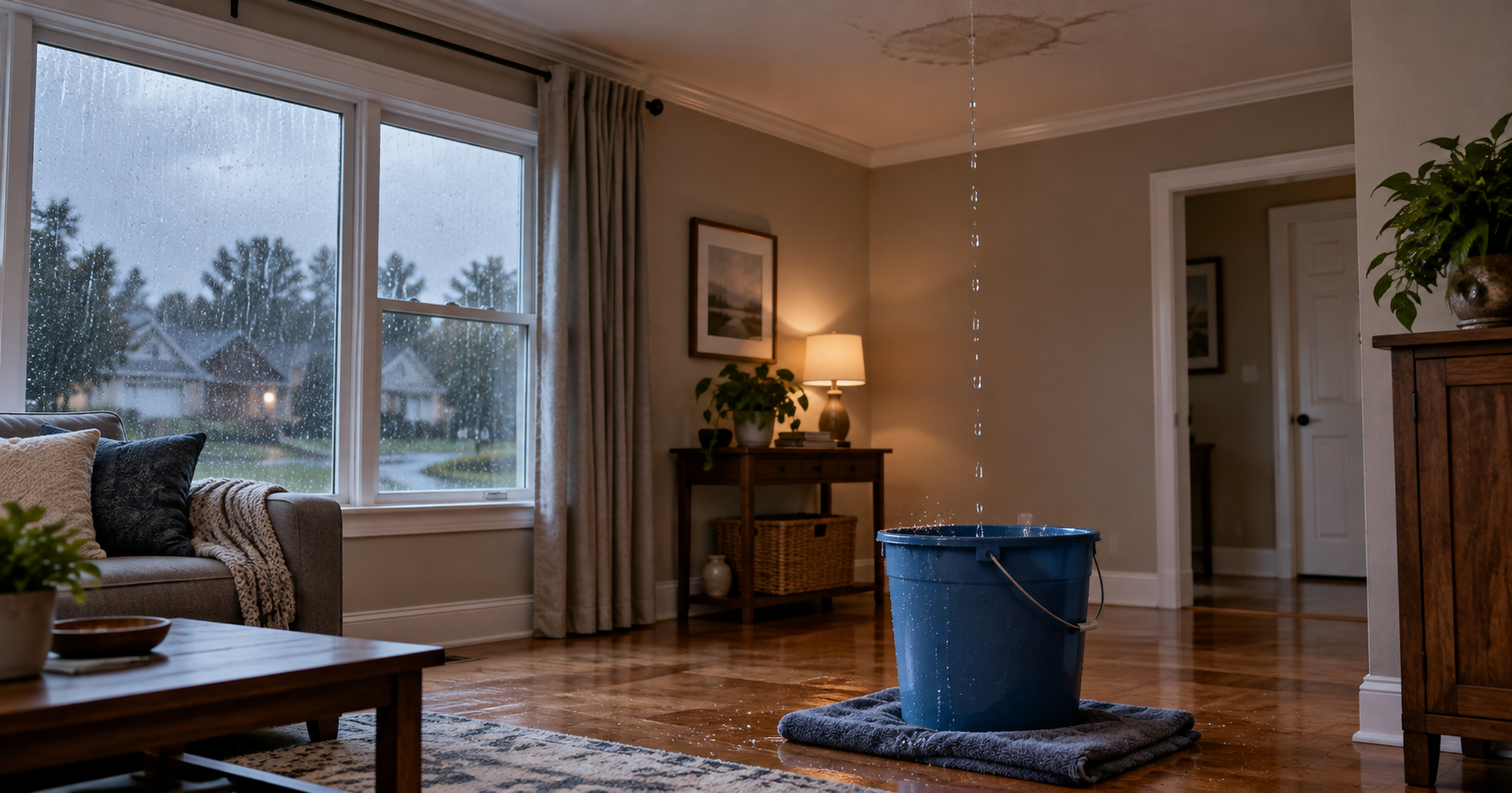
One roof leak does not automatically mean the entire roof must be replaced. Water can enter around a damaged shingle, vent, flashing detail, or another specific opening. A targeted repair may solve an isolated issue.
Repeated leaks are more concerning. If stains return after repairs or new leaks appear in different rooms, the problem may involve several parts of the roofing system. Water can travel along decking or framing, so a ceiling stain may not be directly below the entry point.
Watch for discolored ceilings, peeling paint, damp insulation, musty odors, and moisture around attic penetrations. If water is near electrical fixtures, outlets, or wiring, avoid the area and contact appropriate professionals. Do not open a bulging ceiling or disturb wet materials yourself.
4. Damaged or Failing Flashing
Flashing helps direct water away from vulnerable transitions, including chimneys, walls, roof valleys, skylights, and plumbing vents. Bent, loose, corroded, separated, or poorly sealed flashing can allow water beneath the roof covering.
Flashing problems are sometimes repairable without replacing the full roof. On an older roof, however, damage in several locations may be part of a larger pattern. Layers of sealant or patching may be temporary rather than a lasting solution.
A Noblesville roofing contractor can inspect these transition points safely and determine whether the flashing can be repaired or should be addressed as part of a broader project.
5. Soft or Deteriorated Roof Decking
The roof deck is the structural surface beneath the underlayment and shingles. Prolonged moisture exposure can weaken sections of decking, but homeowners usually cannot evaluate its condition safely from outside.
Possible clues include persistent attic moisture, staining on the underside of the roof, or daylight entering where it should not. Soft decking may also be discovered during a professional inspection or after roofing materials are removed.
Do not press, probe, or walk on an area you suspect is weakened. If decking has deteriorated, the damaged material must be properly evaluated and may need replacement as part of a residential roof replacement.
6. A Sagging Roofline
A roofline should appear straight and consistent. A visible dip, wave, or sag is not a cosmetic issue to ignore. It may point to damaged decking, prolonged moisture exposure, or another structural concern that requires prompt professional attention.
View the roof only from the ground. If you notice sagging—or if an interior ceiling appears to bow—keep people and pets away and arrange an assessment. Avoid entering an attic if the framing or decking appears unstable.
Sagging is one of the more serious warning signs and should not be handled as a do-it-yourself repair. The cause must be identified before anyone can recommend the appropriate scope of work.
7. Attic Moisture, Staining, or Poor Ventilation Symptoms
The attic can reveal problems before they become obvious in living areas. From a safe, stable access point, look for dark stains, damp insulation, rusted fasteners, musty odors, or condensation. Do not walk between joists, touch wet wiring, or approach damaged areas.
Attic moisture does not always come from an exterior leak. Indoor humidity and ventilation problems can also cause condensation. Because the causes can overlap, a professional should evaluate the roof and attic before recommending repairs or replacement.
When attic moisture appears together with shingle deterioration, damaged flashing, or recurring leaks, it adds weight to the case for a comprehensive roof evaluation.
8. Frequent Repairs Are Becoming the Norm
Occasional roof maintenance is expected. Continually repairing new trouble spots is different. If service calls are becoming more frequent, leaks are appearing in multiple locations, or repairs are addressing symptoms without resolving the underlying issue, it may be time to compare another repair with full replacement.
Keep a record of repair dates, affected areas, photographs, and completed work. That history helps a contractor see whether issues are isolated or part of a pattern. The decision should be based on overall condition—not age alone or one symptom.
When Should You Schedule a Professional Roof Evaluation?
Arrange an inspection when you notice several warning signs, storm damage, a recurring leak, or visible sagging. Seek help promptly when moisture is spreading or reaching electrical components.
A trustworthy evaluation should explain:
- Which roof components are damaged
- Whether the problem is isolated or widespread
- What can reasonably be repaired
- Why replacement may or may not be recommended
- What work would be included in the proposed scope
For more information about inspections, repairs, and replacement, review Ace Construction & Remodeling’s roofing services.
Request a Roof Replacement Quote in Noblesville
Homeowners researching roof replacement Noblesville Indiana options should begin with an evaluation of the entire roofing system. Missing shingles, granule loss, damaged flashing, attic moisture, soft decking, sagging, and repeated leaks become more meaningful when considered together.
Ace Construction & Remodeling is a family-owned contractor headquartered in Anderson and serving East Central Indiana since 1996. If you are seeing warning signs and need a professional opinion, request a quote from Ace. The team can evaluate the roof, explain the findings, and help you decide whether a focused repair or full replacement is the appropriate next step for your Noblesville home.